Map of Spain by province
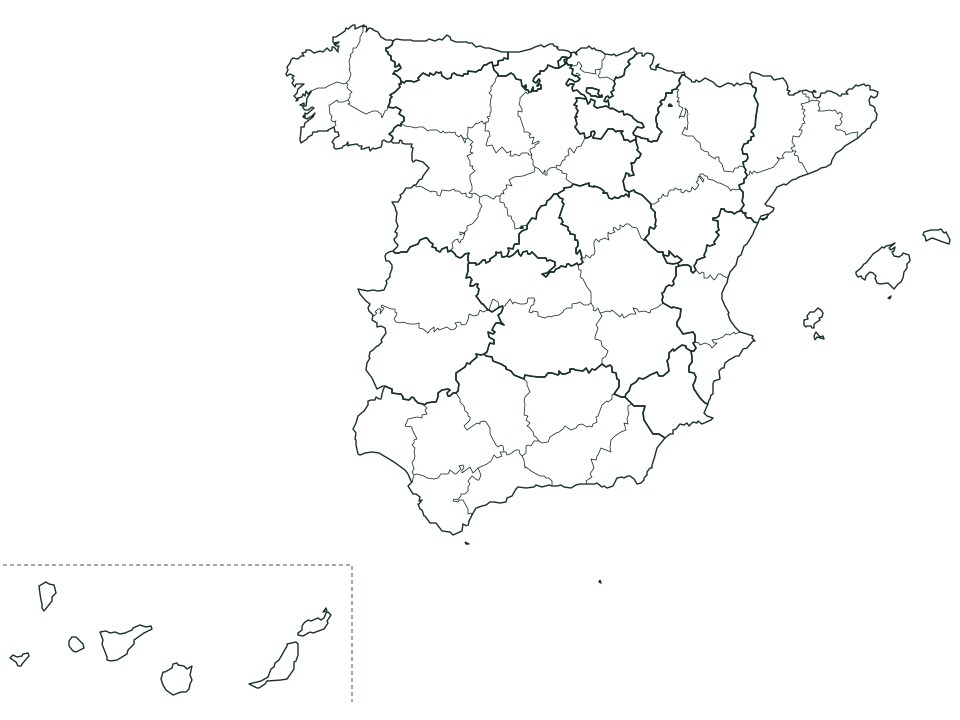
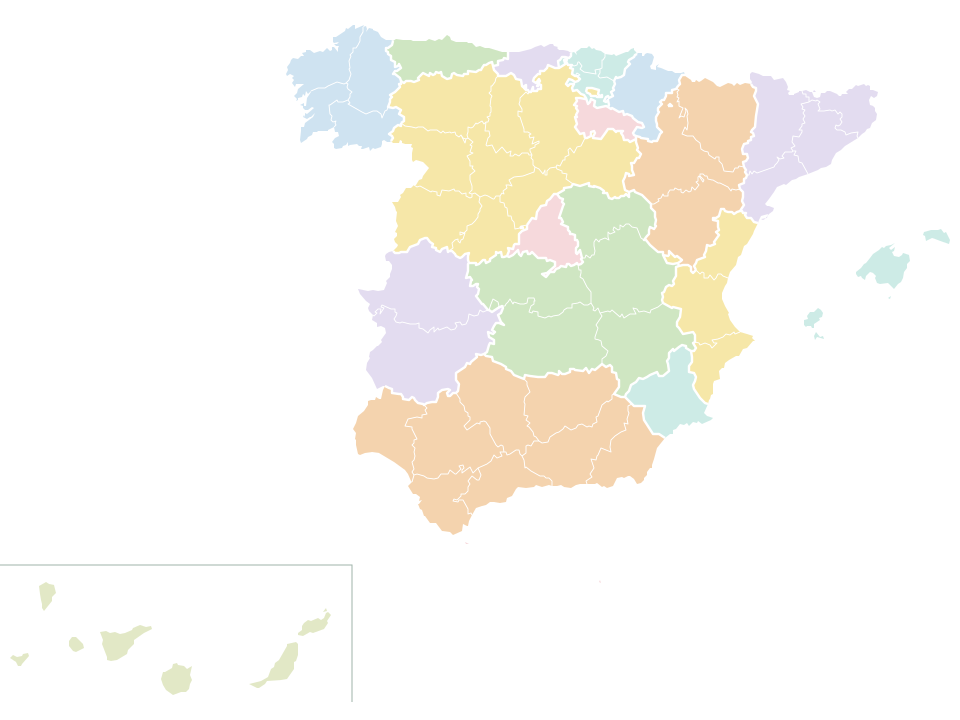
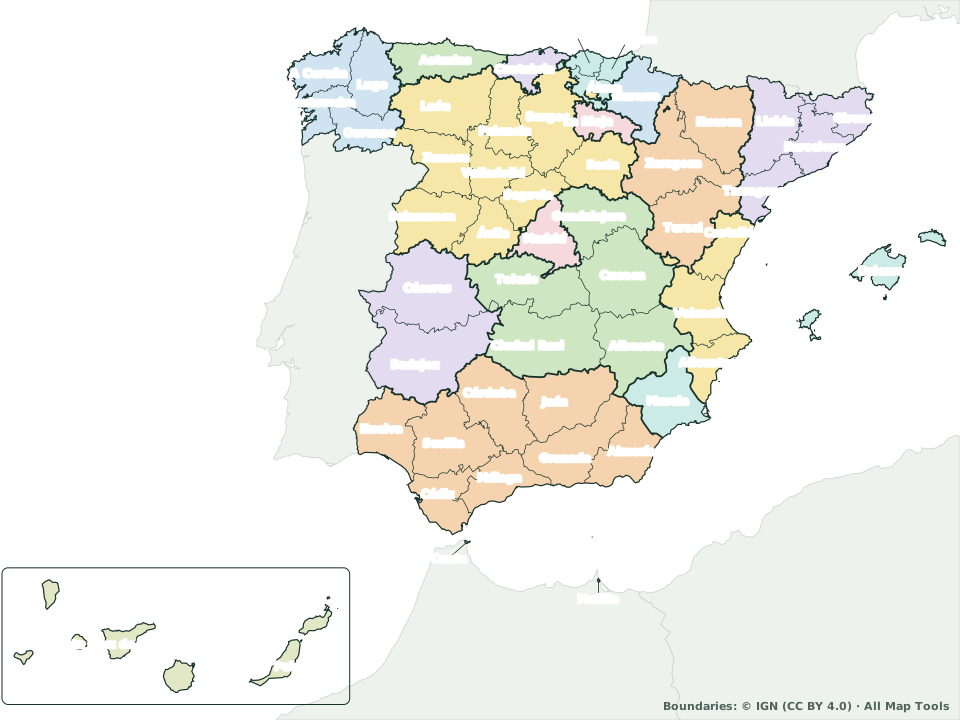
Spain’s 50 provinces plus the autonomous cities of Ceuta and Melilla, in 17 autonomous communities. Hover over a province or tap it to see its capital, pick a view and download it free to print.
Map of Spain by province
The 50 provinces plus Ceuta and Melilla, in 17 autonomous communities. The Canary Islands, in the inset.
Map colors
- Andalucía
- Aragón
- Principado de Asturias
- Islas Baleares
- Canarias
- Cantabria
- Castilla y León
- Castilla-La Mancha
- Cataluña
- Comunidad Valenciana
- Extremadura
- Galicia
- Comunidad de Madrid
- Región de Murcia
- Navarra
- País Vasco
- La Rioja
- Ceuta
- Melilla
Map colors
- Andalucía
- Aragón
- Principado de Asturias
- Islas Baleares
- Canarias
- Cantabria
- Castilla y León
- Castilla-La Mancha
- Cataluña
- Comunidad Valenciana
- Extremadura
- Galicia
- Comunidad de Madrid
- Región de Murcia
- Navarra
- País Vasco
- La Rioja
- Ceuta
- Melilla
Boundaries: © IGN (CC BY 4.0) · Map by All Map Tools · allmaptools.com/maps/spain-provinces/
The 17 communities and their provinces
Each community in its map color, with each province’s capital on the right. 7 communities have a single province.
Andalucía
8 provinces
Principado de Asturias
1 province
Islas Baleares
1 province
Canarias
2 provinces
Cantabria
1 province
Castilla y León
9 provinces
Castilla-La Mancha
5 provinces
Cataluña
4 provinces
Comunidad Valenciana
3 provinces
Extremadura
2 provinces
Galicia
4 provinces
Comunidad de Madrid
1 province
Región de Murcia
1 province
Navarra
1 province
País Vasco
3 provinces
La Rioja
1 province
Andalucía 8 provinces
Aragón 3 provinces
Principado de Asturias 1 province
Islas Baleares 1 province
Canarias 2 provinces
Cantabria 1 province
Castilla y León 9 provinces
Castilla-La Mancha 5 provinces
Cataluña 4 provinces
Comunidad Valenciana 3 provinces
Extremadura 2 provinces
Galicia 4 provinces
Comunidad de Madrid 1 province
Región de Murcia 1 province
Navarra 1 province
País Vasco 3 provinces
La Rioja 1 province
Autonomous cities
In North Africa. They belong to no community.
Just the communities, with their capitals and areas? See the map of Spain by autonomous community.
For the classroom
Free, no sign-up, and ready to print on Letter or A4.
Frequently asked questions
What people most often ask about Spain’s provinces.
Source of the boundaries and areas: IGN, Spain’s national mapping agency (CC BY 4.0). Methodology and sources
How many provinces does Spain have?
50, grouped into 17 autonomous communities. Ceuta and Melilla are autonomous cities: they belong to no province and no community.
What is the largest province?
Badajoz, in Extremadura, at 21,752 km². Next come Cáceres (19,846 km²) and Ciudad Real (19,795 km²).
And the smallest?
Gipuzkoa, in País Vasco, at 1,979 km². Ceuta (20 km²) and Melilla (14 km²) are even smaller, but they are autonomous cities, not provinces.
Which community has the most provinces?
Castilla y León, with 9: Ávila, Burgos, León, Palencia, Salamanca, Segovia, Soria, Valladolid, and Zamora. Next comes Andalucía, with 8.
Which communities have just one province?
7: Principado de Asturias, Islas Baleares, Cantabria, Comunidad de Madrid, Región de Murcia, Navarra, and La Rioja. In each of them the province and the community cover the same land.
Why do some provinces have two names?
Where Spain has a second official language, the official name of some provinces is in that language or in both: Araba/Álava, Alacant/Alicante, Illes Balears, Castelló/Castellón, and València/Valencia. The map uses their short Spanish names: Álava, Alicante, Baleares, Castellón, and Valencia.
Why are the names in Spanish?
Provinces and communities keep their official Spanish names, the ones you’ll see on road signs and Spanish maps. Some have common English forms, like Andalusia (Andalucía), Catalonia (Cataluña) or the Basque Country (País Vasco).
Can I use the map in class or in a project?
Yes. Download it free as PDF, PNG or SVG, no sign-up, or print it straight away. The boundaries come from Spain’s national mapping agency (IGN) under CC BY 4.0: if you publish the map, credit “Boundaries: © IGN”.